 Hiring a paving company in Tyler isn’t something you do every day. But when it’s time to pave a driveway in Hollytree, resurface a parking lot near Broadway Square Mall, or add a new asphalt path in The Cascades neighborhood, you want the job done right.
At Southend Asphalt, we know that most folks just want a clear idea of what to expect. That’s why we’re walking you through the entire process, step-by-step, so you’re never in the dark about how it works or what happens next.
From the first phone call to the final roller pass, here’s what it’s like when you hire a paving team that knows East Texas like the back of our hand.
Key Takeaways
- A site visit in Tyler helps us check the surface, soil, slope, and weather before starting the job.
- A detailed quote explains all costs and outlines a plan that fits your goals, budget, and location.
- A solid foundation is built by handling roots, checking utilities, and using the right tools for Tyler soil.
- A complete paving job includes laying asphalt, adding finishing touches, and giving clear maintenance tips after a final walkthrough.
Step 1. Initial Site Visit and Local Evaluation
Everything starts with an on-site visit so we can get eyes on the space and understand what we’re working with.
In Tyler, we deal with a range of surfaces—from older concrete pads in Azalea District homes to freshly graded dirt lots on the outskirts of town, like along Old Jacksonville Highway.
Soil type, drainage, slope, and sun exposure all play a role in how we prep and pave. East Texas clay, for instance, expands and contracts with moisture, so we evaluate that during our site inspection.
We also take into account how local weather, like heavy spring rain or that scorching July heat, will affect the longevity of your pavement.
Step 2. Custom Quote and Scope of Work
Once we’ve walked the site and talked through your goals, we’ll put together a detailed, easy-to-understand quote. We don’t just throw numbers on a page—we explain the cost of materials, equipment, and labor, all tailored to the needs of your Tyler property.
Whether you’re a business owner needing ADA-compliant striping near UT Tyler or a homeowner off Grande Boulevard wanting a smooth, long-lasting asphalt driveway, the scope of work will reflect your priorities, timeline, and budget.
We’ll also call out any prep work that might be needed before asphalt paving begins.
Step 3. Prepping the Area and Addressing Underground Conditions
Before any asphalt gets laid, the real groundwork begins—literally. In Tyler, where roots from pine and oak trees can create havoc under pavement, we often have to address root removal or install proper base material to prevent shifting.
We coordinate with local utility services like Oncor and the City of Tyler’s Water Utilities to make sure there are no conflicts underground.
On larger commercial jobs, we’ll bring in graders, compactors, and even laser leveling tools to create a solid foundation, especially in areas prone to erosion, like near Bellwood Lake.
Step 4. Asphalt Paving and Compaction
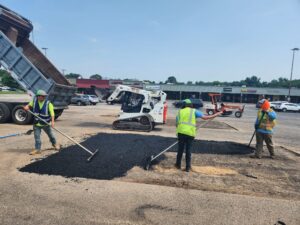
This is where the heavy machines come in.
Once the base is set, we bring in hot mix asphalt, which is transported at 300°F and laid immediately to ensure it binds correctly. Our crews use precision equipment to spread and level the mix, followed by steel-drum and rubber-tire rollers to compact it evenly.
In Tyler, where fluctuating temperatures can cause expansion cracks, we use a blend that’s optimized for Texas Department of Transportation standards and proven to perform well in our region.
This stage can take anywhere from a few hours to a couple of days, depending on the size of the job.
Step 5. Finishing Touches and Striping
After the asphalt has cooled and cured, we add any finishing details.
For homeowners in neighborhoods like Oak Hollow or Cumberland Ridge, that might mean clean edgework and transitions to walkways or garages.
For commercial clients near Loop 323 or Tyler Junior College, we handle striping, ADA markings, directional arrows, and signage using high-visibility paint designed to withstand UV damage.
We also include sealant options depending on your traffic needs and timeline.
Everything is done to match local codes and practical use—because your surface should look good and function right.
Step 6. Final Walkthrough and Maintenance Guidance
Once we’re finished, we don’t just pack up and go.
We’ll do a full walkthrough with you to make sure everything meets expectations. We’ll point out the curing timeline (especially important during humid Tyler summers), give you advice on early use, and provide a maintenance plan tailored to your location.
For example, shaded driveways in areas like The Woods may require different upkeep than wide-open lots near Faulkner Park. We also offer scheduled sealcoating and crack filling to extend the life of your pavement and save you money long-term.
Want a Smooth, Lasting Surface Without the Guesswork?
You shouldn’t have to second-guess every step of a paving job or worry about how it holds up to East Texas weather. At Southend Asphalt, we walk you through the entire process, from local soil prep to long-term maintenance, so nothing gets overlooked.
Whether you’re paving a new commercial lot off Troup Highway or need a fresh driveway laid in South Tyler, we bring the right crew, materials, and knowledge to get it done right the first time. No surprises. No shortcuts. Just solid, reliable paving from people who know Tyler like home.
Call us today to get your free quote and see why East Texans trust Southend Asphalt for professional paving done right.
Frequently Asked Questions
How long does asphalt typically last in Tyler’s climate?
In Tyler, asphalt surfaces usually last 15 to 20 years with proper care, including sealcoating, crack repair, and routine maintenance to protect against East Texas heat, rain, and shifting clay soil.
Can you handle small residential jobs like driveways or private roads?
Yes, we work on all sizes of residential paving projects, from single-car driveways in The Woods to long private roads out near Flint or along Old Noonday Road.
Do you offer asphalt resurfacing instead of full replacement?
Absolutely. If your base is solid, we can resurface worn pavement to save you time and money without tearing everything out—common for lots near Green Acres or historic neighborhoods.
Is there a best time of year to schedule asphalt paving in Tyler?
Spring and fall offer the best conditions, but we schedule work year-round. We plan around heat and humidity to ensure proper compaction and curing for long-lasting results.